
Nova Main

Nova
Problem

The goal of this project was to move away from simple scripts and instead build a professional reusable UI component using advanced JavaScript logic and modules. Many basic web tools are difficult to scale or break when you try to use them more than once on a single page. To solve this, I created a Counter system using Object-Oriented Programming (OOP) that keeps its own data safe and updates the interface automatically. I also used class inheritance to create a more advanced "Step Counter" that can jump by custom amounts, showing how code can be extended without being rewritten. The final result is a clean, developer-friendly documentation page that demonstrates how to implement multiple, independent counters that are responsive and visually interactive.
Responsibility

I was responsible for architecting a scalable UI component that replaced procedural scripts with a robust, class-based system. I engineered the core Counter class using Object-Oriented Programming (OOP) to ensure complete encapsulation, allowing multiple independent instances to coexist on a single page without data collisions. My role involved implementing state-driven UI updates, where I wrote the logic to automatically toggle CSS classes and disable buttons when the count reached zero. Furthermore, I expanded the system’s functionality by using class inheritance to build a StepCounter subclass, demonstrating how to leverage super and method overriding to add custom features while maintaining a clean, reusable codebase.
Design Process
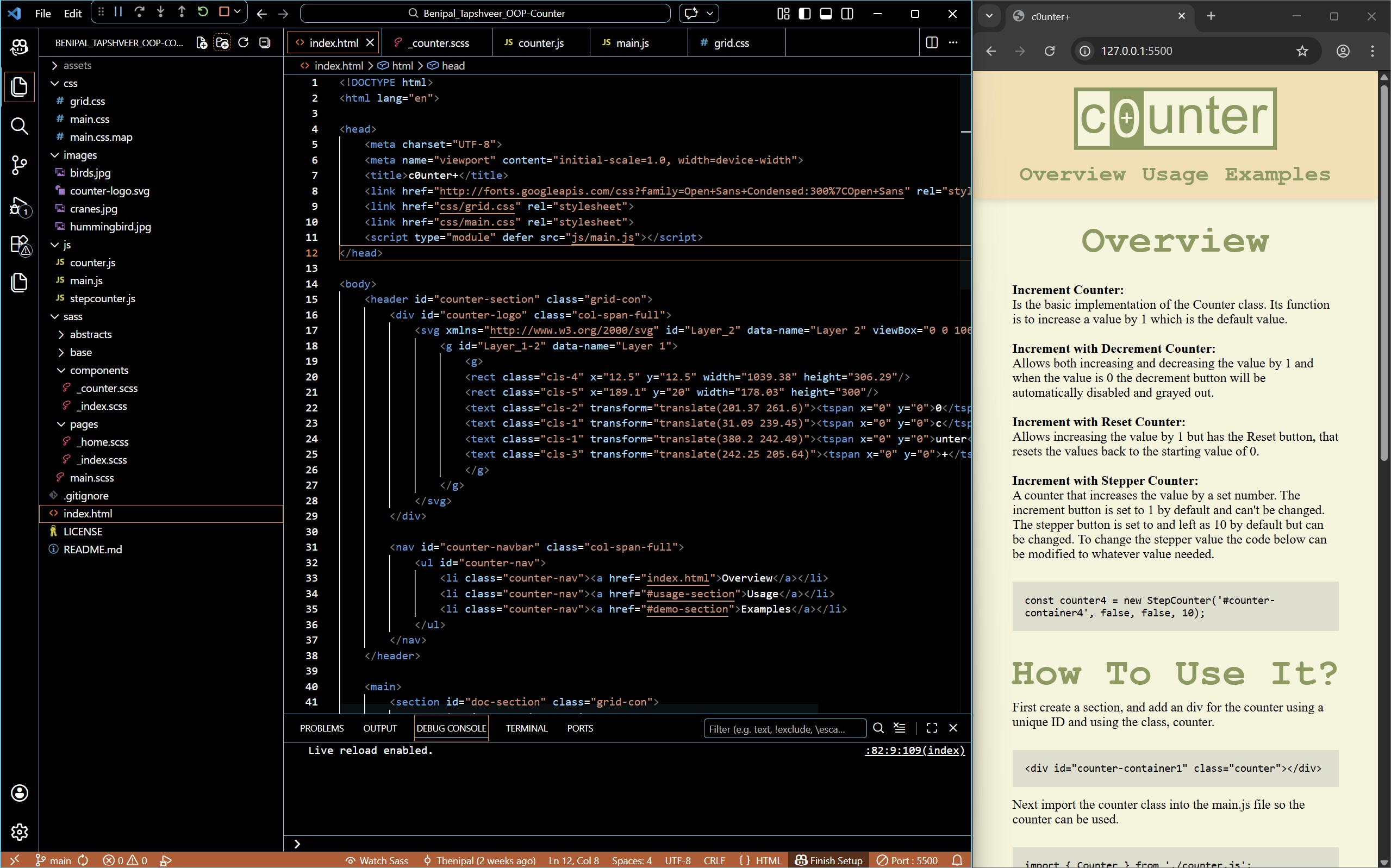

I began by taking a basic, functional counter and recreated it into a modular, class-based system. I redesigned the architecture so that the preventing negative numbers and turning gray being disabled. I then engineered the Reset function, ensuring it not only cleared the data but also provided developer feedback through the console in the 3rd counter.
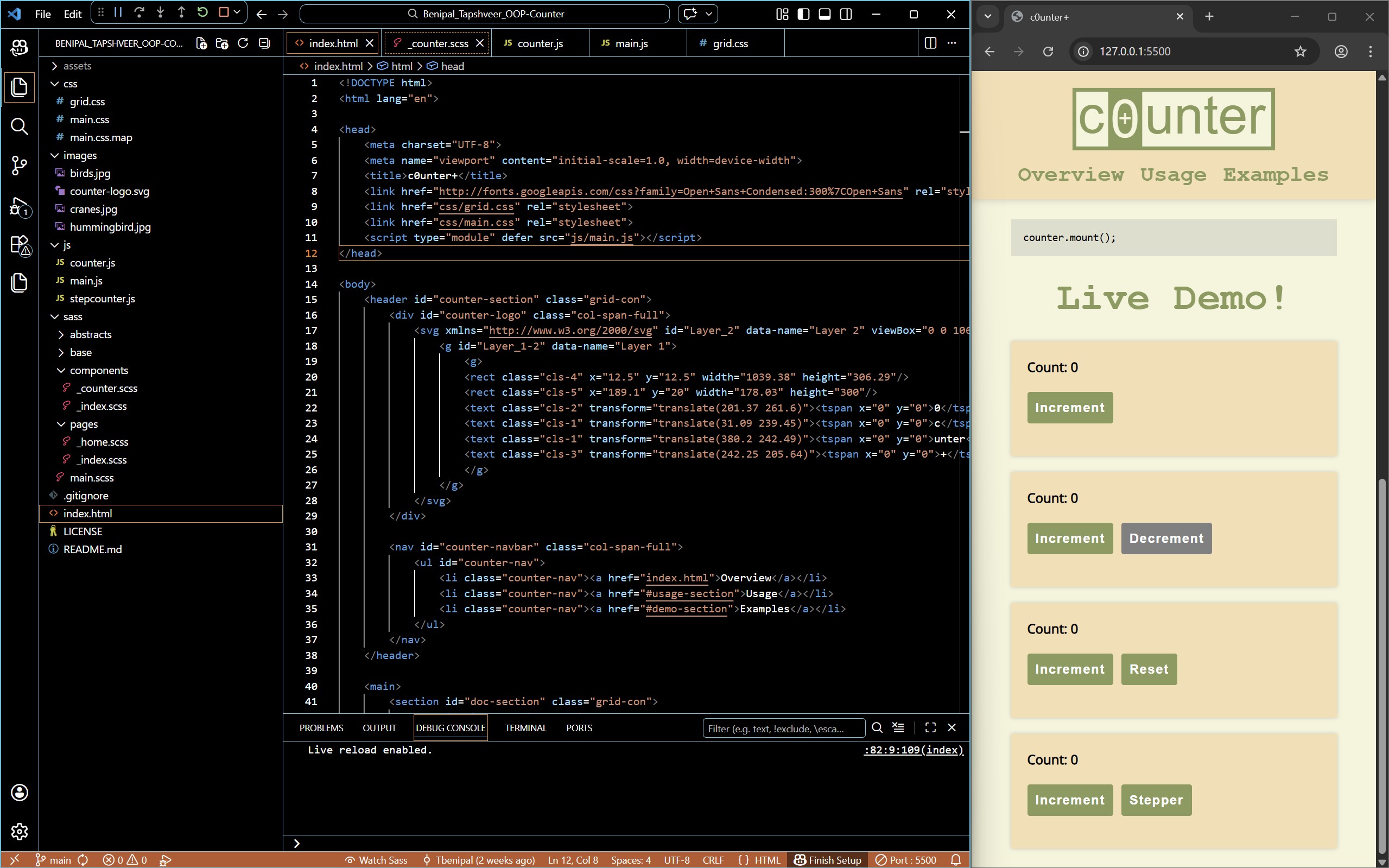




To demonstrate more advanced programming, I created the 4th counter with the Step Counter function. Instead of writing a whole new set of code, I used class inheritance to borrow everything from my first counter while adding a custom "step" parameter and extending it. By using the super keyword and overriding specific methods, I allowed the counter to jump by any number (like 5 or 10) while still keeping the original safety features intact. I created the documentation that shows how a simple tool and each counter worksproduct.
Final Result
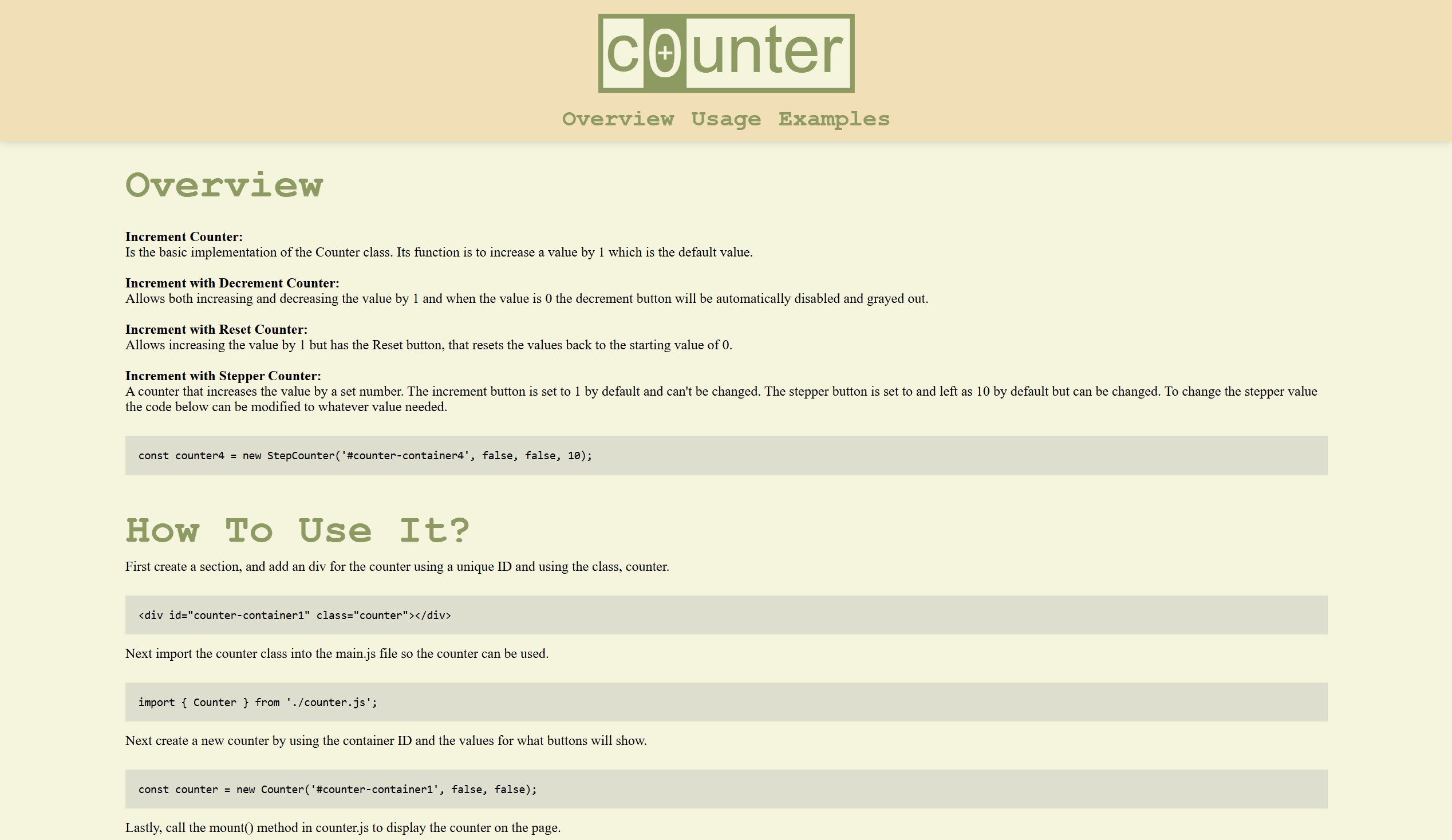
The c0unter+ project successfully transformed a basic JavaScript function into a scalable, high-performance UI component system designed for modern web environments. By applying Object-Oriented Programming (OOP), I engineered a robust architecture that supports multiple, independent instances on a single page, eliminating the risk of data collisions common in procedural scripts. This solution provides a seamless user experience through state-driven UI updates, where internal logic automatically manages visual cues—such as graying out and disabling buttons at zero—to prevent invalid inputs. The final product is not just a functional tool, but a developer-centric asset featuring clean code, modular exports, and a professional documentation page that details its API and implementation. The project highlights the power of inheritance and technical efficiency, specifically through the development of the StepCounter subclass. By leveraging the super keyword and method overriding, I was able to extend the base counter’s functionality to support custom increments without duplicating the core logic. This demonstrates a sophisticated approach to the Don't Repeat Yourself (DRY) principle, allowing the tool to adapt to diverse client needs while remaining lightweight. Ultimately, this project serves as a comprehensive example of how to refactor legacy code into a professional, portfolio-ready system that balances complex logic with a clear, interactive interface.